

The Merrow, or if you write it in Irish, Moruadh or Murrughach, from muir (sea) and oigh (a maid), is not uncommon they say on the wilder coasts. The fishermen do not like to see them for it always means coming gales.

The male Merrows (yes, they do exist depending upon which legends you read) usually have green teeth, green hair, pig's eyes, red noses, and duck-like scales between their fingers.

Sometimes they prefer good-looking fishermen to their sea lovers. Near Bantry in the last century, there is said to have been a woman covered all over with scales like a fish who was descended from such a marriage. Sometimes they come out of the sea and wander about the shore in the shape of little hornless cows.
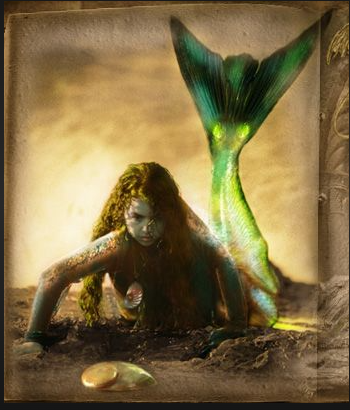
Whatever we choose to call them, the merrows are usually described as incredibly beautiful maidens with long green hair, and flat feet with webbed fingers and toes for better swimming. The merrows sing seductively, just like Greek sirens. However, unlike the sirens, the merrow don’t do this to tempt sailors to their doom. They’re not as malevolent as the sirens. Instead, they usually take sailors and fishermen to live with them underwater, entranced to love, follow, and obey the merrow’s every wish.
(Reference: Mermaid.Net and https://symbolsage.com/the-merrow-mythology)

Who and what are the Merfolk? Merfolk are legendary water-dwelling human-like beings. They are attested in folklore and mythology throughout the ages in various parts of the world. Female merfolk may be referred to as mermaids, although in a strict sense mermaids are confined to beings who are half-woman and half-fish in appearance. Male merfolk are called mermen.


(Reference: Mermaid.Net)



Are mermaids real? Oh yes, they are quite real. There are so many different types of mermaids the average human would be quite surprised. But, I as well was also surprised when I found so many of my kind on the internet. It seems like many artists, photographers, scientists, and mermaid enthusiasts were not to far from the truth when they spoke or drew about mermaids. Although this page will be referring to merfolk in general, the term "mermaid" will be mostly used to signify the entire species because if the majority of merfolk popularity revolves around the females.
This portion of The Mermaid's Lagoon will educate users about the different species of mermaid. This document is a brief outline of all the known mermaid species in the world. When the term "known" is used, this refers to all the previously documented, photographed, artistically rendered or witnessed species in the world, under the scientific name "Sirenius".
Asian (Haitian) Mermaid
Sirenius Hindusexei




.jpg)
